

Many people assume that if they die without making a Will, their property will automatically go to their spouse and children. The reality is more complicated. When a person dies without leaving a valid Will, they are generally described as having died intestate. Their estate must then be administered according to the applicable law governing succession and administration in the relevant circumstances. Understanding what happens when someone dies without a Will in Nigeria is important because the process can involve legal procedures, applications for Letters of Administration, identification of beneficiaries, settlement of debts, and distribution of the deceased’s estate. What Does It Mean to Die Without a Will? A person who dies without a valid Will is generally said to have died intestate. This can happen where: The person never made a Will. A purported Will is invalid. The Will does not effectively dispose of the relevant property. The Will has been revoked. When this happens, the deceased’s wishes cannot simply be assumed. The estate must be administered according to the applicable succession laws. What Happens to the Deceased’s Property? The death of an individual does not mean that family members can simply take possession of the deceased’s assets and distribute them among themselves. The estate may include: Land and buildings. Money in bank accounts. Shares and investments. Vehicles. Business interests. Personal property. Debts owed to the deceased. The legal process for administering these assets depends on the circumstances and the law applicable to the estate. Who Has the Right to Administer the Estate? Where there is no valid Will, there are no executors appointed by the deceased under a Will. Instead, persons entitled to administer the estate may apply for Letters of Administration from the appropriate Probate Registry. The specific persons entitled to apply and the order of priority can depend on the applicable law and the circumstances of the deceased’s family. It is therefore important not to assume that the oldest child, spouse, or another relative automatically has authority to administer the estate. What Are Letters of Administration? Letters of Administration are a legal authority granted by the appropriate Probate Registry to persons known as administrators, enabling them to administer the estate of a person who died intestate. The administrators may, subject to the law and the terms of the grant: Collect and manage the deceased’s assets. Pay legitimate debts and liabilities. Deal with estate property. Distribute the remaining estate to persons entitled to it. A person should not simply assume control over the deceased’s estate without the necessary legal authority. How Is the Estate Distributed? One of the most important things to understand about what happens when someone dies without a Will in Nigeria is that there is no single rule applicable to every intestate estate throughout Nigeria. The applicable law may depend on factors such as: The state in which the estate is being administered. The nature and location of the property. The deceased’s personal law. Whether customary law applies. The deceased’s marriage and family circumstances. Applicable legislation governing succession. For this reason, the distribution of an intestate estate should be determined after obtaining appropriate legal advice rather than relying on assumptions about who is entitled to inherit. Can a Spouse Automatically Inherit Everything? No. A surviving spouse does not simply become the owner of everything belonging to the deceased merely because there is no Will. The rights of a spouse and other beneficiaries depend on the applicable succession law and the circumstances of the estate. Similarly, children, parents, siblings, or other relatives may have rights depending on the applicable law. This is one of the reasons why proper estate planning is so important. What About Family or Customary Law? Succession can become particularly complicated where customary law is relevant. Nigeria has a diverse legal system, and customary rules of succession differ between communities. Some customary rules may also be subject to statutory or constitutional limitations. Consequently, families should not assume that a customary practice automatically determines the legal distribution of every estate. Where there is uncertainty, professional legal advice should be obtained. What Happens to the Deceased’s Debts? An estate does not consist only of assets. The deceased may also have outstanding: Loans. Taxes or other liabilities. Business debts. Contractual obligations. Other legitimate debts. The administration of the estate generally involves identifying and dealing with legitimate liabilities before the estate is finally distributed to beneficiaries, subject to applicable law. Beneficiaries should therefore not assume that every asset left by the deceased can immediately be distributed. What If Family Members Disagree? Disputes can arise where family members disagree about: Who is entitled to inherit. Who should administer the estate. Ownership of particular properties. The validity of customary claims. Whether particular assets belong to the estate. How the estate should be distributed. Where disagreements cannot be resolved amicably, legal proceedings may become necessary. Early legal advice can help families understand their rights and explore appropriate methods of resolving the dispute. Can Someone Sell the Deceased’s Property Without Letters of Administration? Generally, family members should not assume that they can lawfully sell or otherwise deal with estate assets simply because they are relatives of the deceased. The authority to administer and deal with estate property ordinarily arises through the appropriate legal process. Attempting to sell or transfer estate assets without proper authority can create serious legal complications and may expose those involved to claims or other consequences. Why Dying Without a Will Can Create Problems Dying intestate does not mean that a person’s property will be lost. However, it can make estate administration more complicated. Potential difficulties include: Disputes among family members. Uncertainty regarding beneficiaries. Delays in obtaining authority to administer the estate. Disagreements over property. Complications involving customary succession. Additional legal and administrative costs. A properly prepared Will can provide much greater certainty regarding how a person’s estate should be administered. How to Make Estate Administration Easier Whether or not a person has substantial wealth, some basic estate planning can make a significant difference. Consider: Preparing

How to Verify Land Title Before Buying Property in Nigeria
Buying land or property is a significant financial investment, and one that should never be made without proper legal due diligence. Every year, many unsuspecting buyers lose money because they rely solely on the seller’s assurances without verifying the property’s legal status. Fraudulent sales, defective titles, government acquisition, and ownership disputes are common risks that can be avoided through proper investigation. Understanding how to verify land title before buying property is essential for anyone seeking to invest in real estate. A careful verification process helps confirm ownership, identify potential legal issues, and protect your investment. This article outlines the key steps involved in verifying land title before purchasing property in Nigeria. 1. Confirm the Identity of the Seller The first step is to establish that the person offering the property for sale has the legal authority to do so. Where the seller is an individual, request valid identification and documents showing ownership of the property. Where the seller is acting on behalf of another person, verify the legal authority under which the sale is being conducted, such as a valid Power of Attorney. If the property belongs to a company, confirm that the company has authorised the transaction through the appropriate corporate processes. 2. Examine the Title Documents Carefully inspect all documents relating to the property. Common title documents include: Certificate of Occupancy (C of O) Deed of Assignment Deed of Conveyance Registered Survey Plan Governor’s Consent Court Judgment (where applicable) Letters of Administration or Grant of Probate where the owner is deceased Possession of title documents alone does not guarantee valid ownership, but they provide the foundation for further legal verification. 3. Conduct a Search at the Land Registry One of the most important steps in how to verify land title before buying property is conducting an official search at the relevant State Land Registry. A land registry search helps determine: Whether the title is genuine. Whether the seller is the registered owner. Whether the property has been registered. Whether there are mortgages, charges, or other encumbrances. Whether there are restrictions affecting the property. This search can reveal issues that may not be apparent from the documents presented by the seller. 4. Verify the Survey Plan A registered survey plan helps identify the exact location and boundaries of the property. The survey should be verified to determine: Whether it corresponds with the land being sold. Whether the boundaries are accurate. Whether it overlaps with neighbouring properties. Whether it falls within government-acquired land or restricted areas. Survey verification is an important safeguard against purchasing land that may later become the subject of disputes. 5. Confirm That the Land Is Not Under Government Acquisition Some land cannot lawfully be transferred because it has been acquired or reserved by the government for public purposes. Before purchasing property, make enquiries through the relevant government authorities to determine whether the land: Is under government acquisition. Forms part of a committed acquisition. Is affected by road expansion or public development projects. Is subject to planning restrictions. Purchasing land under acquisition may expose the buyer to substantial financial loss. 6. Investigate Whether the Property Is Subject to Litigation It is advisable to determine whether the property is involved in any ongoing legal dispute. A property that is the subject of litigation may expose the purchaser to prolonged court proceedings and uncertainty regarding ownership. Where appropriate, enquiries should be made from the seller, neighbouring property owners, and other relevant sources. 7. Inspect the Property Physically A physical inspection is just as important as reviewing legal documents. During the inspection: Confirm that the property matches the description in the documents. Verify the boundaries. Identify any occupants. Observe any signs of disputes or competing claims. Speak with neighbours or community representatives where appropriate. Physical inspection often reveals practical issues that documents alone cannot disclose. 8. Engage a Property Lawyer The safest way to verify land title is to engage an experienced property lawyer to conduct comprehensive legal due diligence. A lawyer can: Examine title documents. Conduct land registry searches. Review survey plans. Identify legal defects. Prepare and review transaction documents. Advise on Governor’s Consent and title perfection. Ensure compliance with applicable laws. Professional legal guidance significantly reduces the risk of purchasing defective property. Common Red Flags to Watch Out For When purchasing land or property, exercise caution if: The seller refuses to provide title documents. The purchase price is significantly below market value without explanation. Different people claim ownership of the same property. The seller insists on immediate payment without documentation. The survey plan does not correspond with the property. There are visible signs of disputes or conflicting possession. These warning signs should never be ignored. How Lexforte Attorneys Can Help At Lexforte Attorneys, we provide comprehensive legal services for individuals, businesses, and investors involved in property transactions. Our services include: Property due diligence. Land title verification. Property documentation. Governor’s Consent applications. Title perfection. Property acquisition and disposal. Land dispute resolution. We work diligently to ensure that every property transaction is legally secure and that our clients invest with confidence. Conclusion Knowing how to verify land title before buying property is one of the most important steps in protecting your investment. Proper due diligence can help identify fraudulent transactions, defective titles, government acquisition, and other legal issues before money changes hands. Purchasing property without verification may expose a buyer to unnecessary financial loss and prolonged litigation. By engaging experienced legal professionals and conducting thorough investigations, buyers can make informed decisions and secure valid title to their property. Planning to buy land or property? Contact Lexforte Attorneys for professional land title verification, due diligence, and property documentation services before you invest.
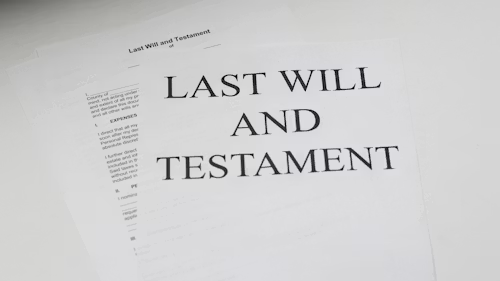
Why Every Adult Should Have a Will
Many people believe that making a Will is only necessary for the wealthy, the elderly, or those with substantial assets. This misconception has left countless families facing uncertainty, disputes, and unnecessary legal challenges following the death of a loved one. The truth is that every adult should have a Will, regardless of age, occupation, or financial status. A properly drafted Will allows you to determine how your assets will be distributed, who will manage your estate, and how your loved ones will be provided for after your passing. This article explains why every adult should have a Will and the benefits of planning your estate before it becomes necessary. What Is a Will? A Will is a legal document in which a person, known as the testator, sets out instructions on how their assets and estate should be managed and distributed after death. A valid Will can also appoint executors to administer the estate, nominate guardians for minor children, and express other lawful wishes concerning the administration of the estate. 1. You Decide Who Inherits Your Assets One of the greatest benefits of having a Will is that you—not the law—decide who receives your property. Your Will may distribute: Land and buildings. Money in bank accounts. Investments. Vehicles. Business interests. Personal belongings. Other valuable assets. Without a valid Will, your estate may be distributed according to the applicable laws governing intestate succession, which may not reflect your personal wishes. 2. It Protects Your Family from Future Disputes Disagreements among family members frequently arise when a person dies without leaving clear instructions. A properly drafted Will reduces uncertainty by clearly stating your intentions regarding the distribution of your estate. While disputes can still occur, a valid Will often minimises conflict and provides a clear framework for administering the estate. 3. It Protects Minor Children Parents with young children should seriously consider making a Will. A Will allows you to nominate trusted individuals who can care for your minor children if you are no longer alive. Although the court retains the ultimate responsibility to act in the child’s best interests, your wishes carry significant weight. Without a Will, decisions regarding guardianship may become more complicated and could lead to disagreements among family members. 4. It Enables Efficient Estate Administration Where a valid Will exists, the executors named in the Will can apply for Probate and administer the estate in accordance with your instructions. This process is often more straightforward than where no Will exists, in which case eligible family members may need to apply for Letters of Administration before the estate can be managed. Proper estate planning can therefore reduce delays and uncertainty for your beneficiaries. 5. It Protects Your Business Interests If you own a business, a Will can provide clear instructions regarding your ownership interest. Without proper planning, uncertainty over business assets may disrupt operations, affect employees, or create disputes among family members and business partners. A carefully drafted Will helps preserve business continuity and protects the value of your enterprise. 6. It Gives You Peace of Mind Estate planning is not about anticipating death—it is about protecting the people and causes that matter most to you. Knowing that your affairs have been properly organised provides reassurance that your loved ones will have clear guidance and fewer legal obstacles during an already difficult time. Common Misconceptions About Wills Many people delay making a Will because they believe: They are too young. They do not own enough property. Their family already knows their wishes. They can prepare a Will later. Unfortunately, life is unpredictable, and delaying estate planning may leave your loved ones without clear legal direction. Can a Will Be Changed? Yes. A Will can generally be reviewed and updated during your lifetime, provided you have the legal capacity to do so. It is advisable to review your Will after major life events such as: Marriage. Divorce. The birth or adoption of a child. Acquisition of significant assets. Starting or selling a business. The death of a beneficiary or executor. Regular reviews help ensure that your Will continues to reflect your current wishes. Why You Should Seek Professional Legal Assistance Although various Will templates are available online, estate planning is rarely a one-size-fits-all process. A lawyer can help ensure that your Will: Complies with applicable legal requirements. Clearly reflects your intentions. Minimises ambiguity. Reduces the risk of future disputes. Integrates with your broader estate planning objectives. Professional legal advice helps ensure that your wishes can be carried out effectively. How Lexforte Attorneys Can Help At Lexforte Attorneys, we provide comprehensive estate planning services tailored to the unique needs of individuals, families, and business owners. Our services include: Drafting and reviewing Wills. Estate planning and succession advisory. Probate applications. Letters of Administration. Estate administration. Resolution of inheritance and probate disputes. We are committed to helping our clients protect their assets, preserve family harmony, and ensure that their wishes are honoured. Conclusion The importance of estate planning cannot be overstated. Why every adult should have a Will is no longer merely a legal question—it is a practical one. A valid Will allows you to decide how your estate will be managed, protects your loved ones from unnecessary disputes, and provides certainty during a difficult period. Whether you own substantial assets or only a few personal possessions, making a Will is one of the most responsible decisions you can take for your family’s future. Need assistance preparing a legally valid Will? Contact Lexforte Attorneys today for professional estate planning and Will drafting services tailored to your needs.

Understanding Governor’s Consent: Why It Matters in Property Transactions in Nigeria
Land ownership is one of the most valuable investments an individual or business can make. However, acquiring property in Nigeria involves more than paying the purchase price and signing a Deed of Assignment. Many property owners overlook an important legal requirement known as Governor’s Consent, only to encounter difficulties when attempting to register their title, sell the property, or use it as collateral for a loan. Understanding Governor’s Consent is essential for anyone buying, selling, or transferring an interest in land. Failure to obtain it where required may affect the legal validity and enforceability of a land transaction. This article explains what Governor’s Consent is, why it is important, when it is required, and how it protects property owners. What Is Governor’s Consent? Governor’s Consent is the approval granted by the Governor of a State to validate the transfer, assignment, mortgage, lease, or other disposition of a statutory right of occupancy over land. The requirement stems from the Land Use Act, which vests all land in each state in the Governor to be held in trust for the use and common benefit of the people. As a result, where a holder of a statutory right of occupancy intends to transfer an interest in land to another person, the Governor’s prior consent is generally required. In simple terms, Understanding Governor’s Consent means recognising that many land transactions are not legally complete until the necessary statutory approval has been obtained. Why Is Governor’s Consent Important? Obtaining Governor’s Consent serves several important legal purposes. It: Confirms that the transfer complies with applicable land laws. Enables the registration of title documents. Strengthens the purchaser’s legal ownership. Reduces the risk of future disputes over ownership. Enhances the value and marketability of the property. Makes it easier to use the property as security for credit facilities. Provides greater certainty in future property transactions. Without proper title perfection, a purchaser may face unnecessary legal and commercial challenges. When Is Governor’s Consent Required? Governor’s Consent is commonly required where there is a transfer or disposition of an interest in land covered by a statutory right of occupancy. Examples include: Sale of land. Assignment of property. Long-term leases. Mortgages. Gifts of land. Transfer of ownership between parties. Whether Governor’s Consent is required in a particular transaction depends on the nature of the title and the applicable legal framework. Professional legal advice should always be sought before concluding any property transaction. What Documents Are Commonly Required? Although requirements may vary from one state to another, applications for Governor’s Consent often require documents such as: Duly completed application forms. Deed of Assignment or other relevant title document. Survey Plan. Evidence of the grant or existing title. Tax clearance or other statutory documents where applicable. Evidence of payment of prescribed fees. Submitting complete and accurate documentation helps minimise delays during processing. What Happens If Governor’s Consent Is Not Obtained? Failure to obtain Governor’s Consent where required can create significant legal and practical challenges. Possible consequences include: Difficulty registering title documents. Challenges in proving ownership. Inability to use the property as collateral for financing. Delays in future sales or transfers. Increased risk of disputes relating to ownership. Possible legal complications arising from non-compliance with statutory requirements. For these reasons, Understanding Governor’s Consent is essential for every property purchaser and investor. The Role of a Property Lawyer The process of obtaining Governor’s Consent involves legal documentation, regulatory compliance, and interaction with relevant government agencies. An experienced property lawyer can: Review title documents. Conduct property due diligence. Prepare and review transaction documents. Advise on legal requirements. Coordinate the title perfection process. Liaise with the appropriate land registry and government authorities. Help resolve issues that may arise during the application process. Professional legal guidance reduces errors and ensures that the transaction complies with applicable laws. How Lexforte Attorneys Can Help At Lexforte Attorneys, we provide comprehensive legal services relating to land and property transactions. Our services include: Property due diligence and title verification. Land and property documentation. Applications for Governor’s Consent. Title perfection and registration. Property acquisition and disposal. Real estate advisory. Property dispute resolution. We work closely with individuals, businesses, developers, and investors to ensure that every property transaction is legally secure, properly documented, and completed efficiently. Conclusion Understanding Governor’s Consent is fundamental to protecting your investment in land and ensuring that your ownership is legally recognised. While the process may appear technical, obtaining the necessary statutory approval can save property owners from costly disputes and future complications. Whether you are purchasing your first plot of land, acquiring commercial property, or transferring an existing interest, obtaining the right legal advice is essential. At Lexforte Attorneys, we are committed to guiding our clients through every stage of the property transaction process, ensuring that their interests are protected and their titles are properly perfected. Need assistance with Governor’s Consent or title perfection? Contact Lexforte Attorneys today for professional legal advice and seamless property documentation services.

Five Essential Legal Checks Before Buying Land in Nigeria
Five Essential Legal Checks Before Buying Land in Nigeria Purchasing land is one of the most significant investments an individual or business can make. Unfortunately, many prospective buyers lose substantial sums of money each year due to inadequate due diligence, fraudulent transactions, defective titles, and failure to comply with legal requirements. A parcel of land may appear attractive and even be physically available, yet still be subject to disputes, government acquisition, encumbrances, or competing ownership claims. Before committing to any land purchase, it is essential to conduct proper legal checks to ensure that the transaction is valid and that your investment is protected. At Lexforte Attorneys, we strongly recommend that every purchaser obtains professional legal advice before making payment or executing any property documents. Below are five critical legal checks every buyer should undertake before purchasing land in Nigeria. Verify the Seller’s Ownership and Capacity to Sell The first and most fundamental step is to confirm that the person offering the land for sale is the lawful owner or is legally authorised to sell the property. Request and carefully examine documents evidencing ownership, such as: Certificate of Occupancy (C of O)Deed of AssignmentDeed of ConveyanceRegistered Survey PlanCourt Judgment (where title was acquired through litigation)Letters of Administration or Grant of Probate (where the owner is deceased) Where the seller is acting on behalf of another person or a company, verify the authority under which the sale is being conducted. This may include a valid Power of Attorney, board resolution, or letters of administration. Purchasing land from a person without legal authority may result in the transaction being declared void, exposing the buyer to financial loss and lengthy litigation. Conduct a Title Search at the Appropriate Land Registry Never rely solely on the documents presented by a seller. A search should be conducted at the relevant State Land Registry to determine: Whether the title documents are genuine.Whether the land has been properly registered.Whether there are existing mortgages, charges, or other encumbrances.Whether ownership corresponds with the seller’s claims.Whether any restrictions affect the property. A land registry search provides valuable information about the legal status of the property and may reveal issues that are not immediately apparent from the documents presented by the seller. Confirm That the Land Is Free from Government Acquisition and Litigation Not every piece of land is available for private ownership. Some lands are: Under government acquisition.Reserved for public purposes.Subject to compulsory acquisition.Located within road setbacks or government schemes.The subject of pending court cases.Under customary ownership disputes. Where land is under acquisition or involved in litigation, purchasing such property may expose the buyer to prolonged legal battles or even complete loss of the investment. It is therefore important to investigate the status of the land through the appropriate government agencies and, where necessary, conduct independent enquiries within the community where the land is situated. Verify the Survey Plan and Physical Boundaries A Registered Survey Plan is one of the most important documents relating to land ownership. Before purchasing land: Confirm that the survey corresponds with the actual location.Ensure the boundaries are accurately identified.Verify that there is no overlap with neighbouring properties.Confirm that the coordinates do not fall within government-acquired land. Professional surveyors can also determine whether the land lies within committed acquisition, excised land, gazetted land, or freehold areas. A proper survey verification helps prevent future boundary disputes and protects against fraudulent land sales. Ensure Proper Documentation and Title Perfection Many buyers believe that payment alone gives them ownership of land. This is incorrect. After purchasing land, the transaction should be properly documented through legally recognised instruments such as: Contract of SaleDeed of AssignmentDeed of Lease (where applicable)Power of Attorney (where appropriate) Depending on the nature of the transaction, the purchaser may also need to: Obtain Governor’s Consent where required.Pay applicable stamp duties.Register the title documents at the relevant Land Registry.Perfect legal title in accordance with applicable land laws. Failure to perfect title may significantly affect the buyer’s ability to resell the property, obtain financing using the property as security, or successfully defend ownership against competing claims. Why Professional Legal Advice Matters Land transactions involve far more than signing documents and making payment. Every property carries its own legal history, risks, and regulatory requirements. A qualified property lawyer conducts due diligence, prepares and reviews documentation, identifies potential legal issues, and ensures that every stage of the transaction complies with applicable law. Obtaining legal advice before purchasing land can save buyers from costly mistakes, prolonged litigation, and avoidable financial losses. Conclusion Buying land is an investment that should never be approached casually. Taking the time to verify ownership, investigate title, confirm the property’s legal status, inspect survey details, and properly document and perfect the transaction can significantly reduce legal risks and protect your investment. At Lexforte Attorneys, we provide comprehensive legal services for land and property transactions, including property due diligence, title verification, land documentation, Governor’s Consent applications, title perfection, and property dispute resolution. Whether you are purchasing your first plot of land or acquiring commercial real estate, our experienced lawyers are committed to ensuring that every transaction is legally secure and completed with confidence. Need legal assistance with a land purchase? Contact Lexforte Attorneys today for professional advice and comprehensive property due diligence before you invest.